Wednesday, November 30, 2005

Farmers Protest in Abadiano


A farmer blocks the traffic with his tractor in the Spanish Basque town of Abadiano, northern Spain, November 30, 2005. Farmers striking over fuel subsidies held several demonstrations around the country as part of their protest for the government to help offset record high fuel costs. The sign on the tractor reads 'Professional price for diesel-now!'. REUTERS/Vincent West
.... ... .

Saturday, November 26, 2005

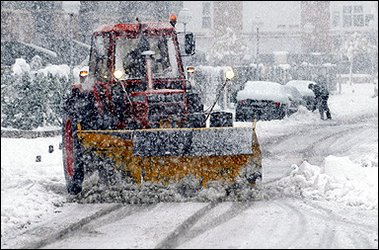
Snow in Mungia


A machine removes snow from the streets of the northern Spanish Basque village of Mungia, during a heavy snow storm. Snowstorms lashed western Europe causing severe disruption to air, rail and road traffic in Belgium, Britain, France, Germany and the Netherlands and cutting off power to thousands of households.(AFP/Rafa Rivas)
.... ... .

Monday, November 21, 2005

Holly Inquisition in Action

And so it happened that today the trial began.

A total of 56 Basques stand accused of being the external network that provides ETA with funds, safe houses and legal presence within the Basque community.

To be honest, Madrid seems to think that any Basque that stands for the self-determination of Euskal Herria is an apologist of terrorism. In doing so, Madrid attacks every single individual or group with the same exact blanket accusation, being members of the entorno.

It was weird to see so many news outlets reporting this trial, then again, since it is up to lazy editors, the only time when the Basques exist is when you can link them to violence.

Here you have what EITb publised today:

Fifty nine people went on trial Monday on charges of directing the logistical side of the armed Basque group ETA's, raising funds, forging passports and helping commandos communicate with one another.

The trial began with a court clerk reading out the indictment. Defence lawyers then asked for the case to be suspended on the grounds that the documentation was not complete. The defendants have not yet entered a plea.

The trial is the largest ever in terms of the number of defendants to go before the National Court, the Spanish tribunal that deals with affairs of state and terrorism cases.

The case stems from an eight-year probe by Baltasar Garzon, Spain's leading anti-terror investigator.

Some of the defendants showed an unofficial Basque identity card instead of the official Spanish one as they entered the court. Most wore grey T-Shirts that read in Basque "For civil and political rights" and the number of the case file, 18/98, crossed out.

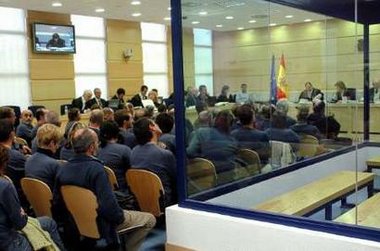
The trial, which is to hear testimony from more than 300 people, is being held under tight security at a trade fair pavilion. The normal venue for such proceedings would be the National Court, but it is too small for a trial with so many defendants, lawyers and reporters. The site was used earlier this year for Europe's first major trial of suspected al-Qaida members.

Five months

Those on trial include alleged members of Basque youth groups and other organizations and businesses that portrayed themselves as coordinators of pro-independence activities but were banned by Garzon on grounds they were a front for fund-raising and other support for ETA. The trial is to last up to five months.

These groups were the "stomach, heart and head" of ETA, prosecutor Jesus Santos said last week. The accused are charged with crimes ranging from membership in or collaboration with a terrorist organization to tax violations, and each is facing a sentence varying from 10 to 51 years in jail.

Basque nationalists say the trial can only hinder prospects for peace, and consider it a byproduct of the previous conservative government which was in power when the probe began.
And Gara:

MADRID
Askasibar refused to answer the questions of both the public prosecutor and the private accusations from a right-wing pressure group called AVT (the Association of Victims of Terrorism), saying he would only respond to the defence attorneys' questions.

The public prosecutor, who is asking the court to sentence this defendant to 15 years in prison for what Spanish law calls 'membership of an armed organisation', nevertheless proceeded to read out his list of 94 questions for Askasibar.

Defence lawyers asked for a delay of the hearing until formal irregularities in the proceedings had been corrected and all the documentary evidence was present in the courtroom. But the court overruled these objections and ordered the trial to proceed.

At the end of the morning session, the court was adjourned until this afternoon.

Coaches

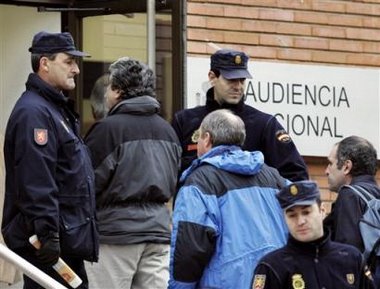
It was nearly 10:30 a.m. when the first day of trial began in the Third Section of the Criminal Court, in the 'Audiencia Nacional'. This is the court in Madrid that deals with cases that cannot be dealt with at a local level.

Shortly earlier, the defendants, 59 in number, arrived from Euskal Herria in several coaches, in the company of their friends, family and a large number of Basque public personalities, all of whom had come to give the accusees their support.

Joxe Mari Olarra, the first of the accused to go through security at Casa de Campo, where the massive trial is to take place, showed his Euskal Herria Identity Card (EHNA) for identification. Since this is not officially recognised, police used Olarra's police file as a form of identification, and allowed him to proceed to the courtroom.

That procedure was repeated for each of the defendants, one by one. Every defendant wore a similar shirt bearing words proclaiming: '18/98: Support civil and political rights!'

The 18/98+ Platform, which was organised in the Basque Country to support those charged in this political witch hunt and to raise public awareness on the issue, had planned a press conference this morning in front of the courthouse, but the Spanish police prevented it from going ahead. But eventually the press conference did take place.

Members of the platform declared that the trial is legally 'untenable'. They also announced simultaneous demonstrations of protest this Saturday in five major Basque cities.

'This trial should never have started. It is nonsense,' said Roberto Etxezarreta, spokesman for the 18/98+ group. 'The right thing to do, in these new times when a more receptive disposition has been announced by the Spanish government, if there is any real intention to usher in a more democratic period following the dark era of Aznar's government, would be simply to declare the case closed.'

'We call for the discontinuation of these trials in the belief that they imply a violation of basic rights and a collective attack on Basques who defend their people's right to defend their future,' he said.

Of the numerous representatives of Basque political, social and trade-union organisations who accompanied the families and friends of the accused to Madrid to show their solidarity, many were unable to get in to the Casa de Campo courtroom owing to the lack of space.
Now, most of the news paper that are all too happy to repeat whatever press release sent to them by one of the big news outlet printed something like this: "56 Go On Trial in Spain in ETA Case" or "Trial Begings Against Alleged ETA Support Groups".

They are not telling the entire truth, they are not ready to compromise, but at least they sort of differentiate the 56 from ETA, as it should be, because in democracies, he who stands accused of a crime is innocent until proven guilty.

But then there is those on Madrid's payroll, those are the ones that printed article titles like these:

United Press International: ETA super-trial opens in Spain

Sydney Morning Herald (Australia): Spain opens ETA support networks trial

But then, the exception to the rule, the one that gave Garzòn, Aznar and even Bush a reason to go to bed mad:

International Herald Tribune: With trial, Spain widens terror breadth

Kudos to IHT for not going for the lazy kind of journalism done by some many around the world.
May justice be done, as it should be.

.... ... .

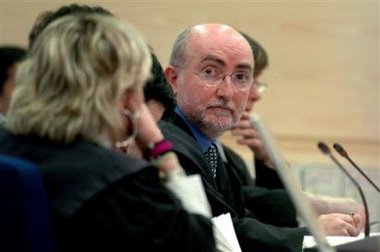
Scenes From the Trial


.... ... .

Thursday, November 17, 2005

Lariz Back to Uruguay

Spain has been trying to export its repression of those Basques who support the right to the self-determination of Euskal Herria to different Latin American countries.
A few days ago I described the situation in which five Basques and a Mexican of Basque background are today due to an extradition request by Madrid, they accuse them of belonging to ETA for which all what the Spaniards have showed as evidence is a copy of a blurry document.
Well, in South America they tried the same, against Josú Lariz Iriondo.
Three times they tried, and three times the justice systems in Uruguay and Argentina found no reason to extradite Lariz Iriondo to Spain, mostly because as a political refugee, they considered rather dangerous to send him to a state where the practice of torture runs rampant.
Berria informs us today that Lariz Iriondo is now free to go back to Uruguay, a country that welcomed him almost 20 years ago.
Here you have the article:
The Elgoibar (Gipuzkoa)-born refugee was deported to Argentina in 2002 after living in Uruguay for sixteen years, and has not been allowed to return until now

Gurutze Izagirre – DONOSTIA (San Sebastian)
After living in Uruguay for 16 years and then being deported, the Basque refugee Josu Lariz will now be able to return to the country. On Monday the Uruguayan President Tavare Vazquez and the Interior Minister Jose Diaz signed a decree authorising this. In 2002 Lariz was deported to Argentina where he was arrested. Last year he was released after a trial on a request for him to be extradited to Spain, but he was not allowed to return to Uruguay. Since then he has been in Argentina without documents.
While the Uruguayan government is dealing with the paperwork, it was decided that Lariz should be provided with a temporary identity card to enable him to travel to Uruguay. The Spanish Government has requested his extradition three times: the Uruguayan Government was approached once and the Argentine Government twice. Moreover, he was arrested in Uruguay three times. Spain has accused him of taking part in an attack in 1984. On each occasion the request for his extradition was examined, but his defence counsel and the prosecution said that the time for bringing prosecution had lapsed. The Argentine prosecutor even went as far as describing the request for extradition as a “scandal”, and if it were granted, then all guarantees would have to be demanded of the Spanish Government. The defence counsel warned of the risk of torture and suffering persecution.
Good for Josú, now all we can hope is that Mexico's Supreme Court shows the same degree of sovereignty and justice and that the six are finally allowed to go back to their families and friends.

.... ... .

Reporters Without Backbones

It took 31 months for the so called Reporters Without Borders to mention the Egunkaria case at their website.
31 months.
During that time, this organization that claims to uphold the most elemental rights for journalists, reporters and photojournalists that find themselves in the crossfire while in exercise of their duty, that very same organization has said absolutely nothing about the decision by Madrid to shut down Egunkaria, then the only newspaper published entirely in Euskera, the Basque language.
Nor did they mention the torture suffered by its director, Martxelo Otamendi and a number of other staff members while in custody of the Spanish authorities.
Here is what they have to say today:
Reporters Without Borders today called on Spanish justice minister Juan Fernando López Aguilar to speed up the judicial proceedings that have kept the Basque-language daily newspaper Egunkaria closed since 20 February 2003, so that it can resume publishing as soon as possible.

The press freedom organisation issued its call on the eve of hearings in which the national court in Madrid will consider the appeals of seven Egunkaria journalists against their indictment on charges of being linked with the Basque armed separatist group ETA.
This press freedom organization kept mute about these series of violations against the human rights and the civil liberties of all those arrested during the night raids against the newspaper.
This is what the lawyer in charge of the Egunkaria case said:
"Despite examining thousands of documents, questioning more than 20 people, searching their homes and workplaces and ordering telephone taps, the judge has found no evidence of a link between Egunkaria and ETA," one of the newspaper's lawyers told Reporters Without Borders. "The charges are based solely on the judge's assumption, which comes down to 'suspicion plus suspicion equals proof'," the lawyer added.
Before today, all you could read at their web site was that Spain was considered a problematic country due to the constant threat of ETA against some Spanish journalists, and even in this article they insist on the same:
Reporters Without Borders added : "We point out that Basque journalists are the most frequent victims of ETA's campaign of terror against the media, which forces them to work with bodyguards or to leave the Basque country altogether."
So, for RWB, there is victims of ETA, but there is no victims of state sponsored violence by Madrid.
Does this remind you of some other fake human rights organizations?
Because that is exactly what RWB is, nothing but an instrument by repressive governments to mislead people and keep the focus away from several instances in which their repressive measures violate all those principles that democratic societies hold sacred.
Several Basque organizations contacted RWB regarding the Egunkaria issue, until today they never got back to anyone, who knows why did they finally acknowledge the situation.
Too little, too late.
* You can read the entire article at Artxiboak.

.... ... .

Wednesday, November 16, 2005

EHNA in Argentina

Udalbiltza gladly announces a deal between Udalbiltza and a number of Eusko Etxeas in Argentina to start issuing the EHNA to Basques in that country.
Here you have the information:

Udalbiltza will sign agreements with Argentine euskal etxeak to allow EHNA processing in the Diaspora

Within the important framework of the National Basque Week in Argentina, which is being held in the city of Necochea this year, Udalbiltza announced it will sign agreements with a series of euskal etxeak in order to make the processing of Euskal Herriko Naziotasun Aitormena (EHNA, Declaration of Basque Nationality) possible for the Diaspora of the said South American country. At least three euskal etxeak expressed their disposition to process EHNA.
This initiative was presented by the elected councillor for Irun and member of the Udalbiltza Executive Commission, Peio Gascon, during a press conference held in Necochea, the location of the aforementioned yearly events, which congregates over a thousand members of the Basque population in Argentina. Gascon appeared before the press flanked by representatives of the towns of Trenque Lauquen (Ignacio Uriarte), Buenos Aires (Irene López), Rosario (Santiago Bereciartua) and San Miguel (Mariana Fernández).
After expressing the gratefulness of the Basque national institution towards the Diaspora in Argentina, “for having maintained and extended Basque culture all year round, and especially this week”, Gascon stressed that this year the Udalbiltza delegation “has not just come to inform you of the situation in the Basque Country and to listen to your thoughts and contributions, we are also offering the Diaspora an opportunity to take part in the Nation Building process and in the struggle to obtain all political and civil rights for the Basque Country”.
He said, “As part of its defence of the rights of the Basque Country, Udalbiltza will continue on the road we begun with the Charter of Rights of the Basque Country, in favour of the right of our country to have national status”. He insisted that “in this field of political and civil rights , the Basque Country, thanks to Udalbiltza, has a practical tool: EHNA, a declaration of Basque nationality which all Basques can join through a personal and freely taken decision”. Then he announced that “as of this week, we are extending EHNA processing to Basques from the Diaspora”.
Gascon explained it was an initiative directed at the Diaspora, “in order to claim Basque nationality, which cannot be substituted by any other nationality”, in a reference to the nationality of Diaspora Basques, in this case, Argentine nationality. Thus, he pointed out that EHNA processing within the Basque community overseas “will only afford a chance to declare the internationally recognised right through which any person has a right to a nationality”. “Through EHNA, the declaration of Basque nationality, all Basques have an opportunity to express their link to the Basque Country in an individual and collective manner” he added.
“today, we have been joined by a number of people and euskal etxeak from Argentina, who support and will bolster the EHNA dynamics in this country” said Gascón, who highlighted the fact that the General Villegas, Trenque Lauquen and Tres Arroyos euskal etxeak will take on EHNA processing on an institutional level. In addition, EHNA will also be processed (through people expressly authorised for this task) in Buenos Aires, Rosario and Bolivar. However, Gascon expressed his conviction that “more euskal etxeak will join this initiative from now on”.
*You can also read the entire text in Euskera at Artxiboak.

.... ... .

Tuesday, November 15, 2005

Euskalidentity - Basquenortasuna

Thanks to Joseba Etxarri and his Euskal Kultura page we learn about a new site on the net dedicated to the Basque identity.
Here you have the link to the page:
And this is how they describe themselves:
Euskalidentity is the web site for Euskalidentity Kultur Elkartea (EIKE), a non-profit cultural association dedicated to study Basque identity worldwide. It was recently created by a group of people coming from different walks of life with two clear goals in mind: promotion and dissemination of Basque culture throughout the planet.
And their objectives:

Euskalidentity is a medium to promote not only interdisciplinary and comparative studies on Basque identity but also to disseminate information related to Basques around the world. Therefore, Euskalidentity is aimed at increasing the awareness of Basque cultural heritage needs of those Basques living abroad, among the general public and policy makers in the Basque Country.

Euskalidentity is conceived as a platform to explore Basque identities worldwide. It aims to become a virtual forum of discussion, which would combine an academic and non-academic approach towards the study and dissemination of information related to Basque people around the world.
So there you have it, check it out.

.... ... .

Today on EITB

We start something new here.
From today on, I will be posting a digest of all the news that EITB posts in English about Euskal Herria.
So, here we go:
Brazilian iron and steel company Gerdau with the 40 percent, Spanish financial group Santander with another 40 percent, and members of the company's board with the 20 percent, have signed today the purchase of the Basque iron and steel company Sidenor, a sale for an amount of 443.8 million Euro.
....
Sidenor basically supplies the European market devoting the 93 percent of its production, which goes mainly to the car industry. It has two iron and steel plants in the Basque cities of Vitoria-Gasteiz and Basauri and one in Reinosa (Cantabria), two forges in Basque towns of Villalba and Elgeta and trade missions in the United Kingdom, France, Germany and Italy.
Real Sociedad striker Darko Kovacevic is confident he will play again this season despite opting for surgery to deal with an Achilles' tendon injury. "It was a difficult decision but I have reached the point where I can't stand the pain and suffering any longer," the former Yugoslavia international told a news conference on Tuesday. "I'm always optimistic, however, and I'm sure I will be back soon and that I will be able to play before the end of the season."
....
The Basque side are in 10th place in the Primera Liga with 16 points from 11 matches.
French police arrested in Baiona (Bayonne) the Basque militant Ekain Rodriguez Goikoetxea, summoned by the Spanish national court within the prosecution against the Basque nationalist left-wing association Segi.
According to police sources, Ekain Rodriguez run away last September 28 2002, a few days after a Spanish judged issued an European order warrant for him.
The organisation in defence of the Basque political prisoners´rights has called a demonstration this evening in front of the police station of Baiona (Bayonne) to protest against this arrest.
On November 20th, the Society of Basque Studies in America will host its 25th annual Hall of Fame at Boise’s Basque Center, Euzkaldunak, Inc. (601 Grove Street). The Society is a non-profit organization, founded in 1979, dedicated to the study and dissemination of Basque culture, tradition, customs and folklore, in America. Membership in the Society is open to all who are interested in the Basques.
This year’s honorees were chosen due to their contributions to Basque culture, welfare and identity.
They include, the Basque Museum & Cultural Center, the leading Basque Museum in the United States; Patty Miller, Executive Director of the Basque Museum & Cultural Center; Albert Erquiaga, prominent organizer and leader of Basque activities in the Boise area; Mari Carmen Totorica, teacher and promoter of Basque culture; and Martin Goicoechea, Bertsolari and promoter of the Basque language.
In spring 2006, Vitoria-Gasteiz will be inaugurating a theme park dealing with risk prevention in the work place, which at 14,000 square metres is set fair to be the largest of its kind in Europe.
With an initial investment of three million euros, put up by the Basque government, the Alava provincial council and local savings bank Caja Vital, the initiative has been promoted by Fundacion Gokai, an organization working to integrate people with discapacities in the work place and society in general.
Ingredients: 2 Irg onions, chopped (2 cups); 5 x cloves garlic, finely chopped; 1 cup uncooked basmati or regular long grain rice; 1 x 14 oz can quartered artichoke hearts, drained; 1 x 16 oz package cauliflower, carrots, and snow pea pods, thawed; 1 cup frozen sliced bell peppers, (from 16 oz package); 2 cup dry white wine; 1 tsp. salt.
Spray 10-inch non-stick skillet with non-stick cooking spray; heat over medium-high heat. Cook onions and garlic in skillet about 8 minutes, stirring occasionally, until onions are tender.
Stir in rice and artichoke hearts. Cook 3 minutes, stirring occasionally. Stir in wine and salt. Heat to boiling; reduce heat to low. Cover and simmer about 10 minutes. Stir in vegetables. Cover and cook 5 minutes or until liquid is absorbed.
Description:"Canned artichoke hearts and a mix of frozen vegetables make this traditional Spanish stew a fast, colourful dish."
The Museum premises are a baroque style building in the Bilbao's old quarter, originally built to house a church and school of the Jesuit Fathers, in accordance with the last will and testament of Domingo de Gorgolla, a native of Bilbao and butler to the Cardinal of Toledo. It was named the San Andrés (Saint Andrew's) School, and provided a considerable religious and cultural contribution to the city, until 1767 when a decree by King Carlos III forced the Jesuits out of Spain.
Two years later, the Saint John's Community of Atxuri moved into the former church, whilst the cloister was occupied by a centre for teachers of letters, Latin and rhetoric, in addition to the Holy House of Compassion with its workshops for printing and bookbinding, textiles and pottery.

.... ... .

A Link to Bakersfield

Last year I was lucky enough to visit Bakersfield in the sister Republic of California during the NABO (North American Basque Organizations) convention.
It was a great time, the Kern County Basque Club facilities were the perfect set up for an event that attracted thousands of people, both Basques and non-Basques.
Just yesterday The Fresno Bee published an article by Diana Marcum with quite a long title:
There's only one old Basco shepherd staying in the boarding rooms upstairs, and only for a few days on his way to Bakersfield.

He's retired, among the last of the last, and will soon be gone.

But the long boarders' table at the red-brick Basque Hotel in downtown Fresno lives on. The table that once fed Basque shepherds who lived upstairs is now a decades-long gathering place for farmers from the west side.

Built in 1924, the hotel is a sturdy landmark — and tradition — on the edge of Chinatown, a neglected part of Fresno that the city and developers are targeting for a make-over.

By 11:30 a.m. every weekday but Monday, the dirt parking lot across the street fills with white pickup trucks — the farmer and retired farmer vehicle of choice. The bar, dusky with swiveling stools, is two-deep with men drinking picon punch (three-deep if it's raining or spareribs are being served). Don't let the innocuous term "punch" fool you, it's a heady-at-first-whiff brandy mixture in those bar glasses Fermin Urroz keeps refilling.
....
The Basque Hotel wasn't a Basque hotel for about eight years in the 1970s. A farm contractor housed workers upstairs and ran a bar and Mexican restaurant downstairs. The red brick was painted over with murals. The bar got a reputation as a rough place and drew a lot of attention from law enforcement. It closed, the workers left, and the building sat vacant.

Fermin Urroz wanted the place because "it was a Basque hotel. It should be a Basque place."

Thousands of men from the Basque region of France and Spain migrated to the United States during the Gold Rush and headed to the open range. Boarding houses with restaurants sprang up to serve the Basque workers, becoming a distinctive part of Western culture.

Another wave of Basque immigration began in the 1950s, when there was a shortage of labor in the sheep industry and Congress increased quotas for Spanish immigrants. But by the late '60s, the European economy improved and Basque immigration dwindled. Today, many of the Basque hotels have shuttered or become touristy spots owned by non-Basque.

Fermin Urroz came from Spain in the early '60s and spent 5 1/2 years as a shepherd. He sometimes lived at the Santa Fe, another old Basque hotel in Fresno.
Well, this comes handy now that I announce reciprocal linkage with a blog called "Who Are You to Accuse Me?", published by Philippe Duhart, a fellow Basque from Bakersfield.
As it happen, both his family and mine came from Iparralde, the Northern Basque Country.
I hope I can go back to Bakersfield soon, eating a couple of meals at Benji's and Wool Growers were highlights of that trip, although the rack of lamb we ate that Sunday was to die for.
Nik (Heart) Bakersfield.
*You can also read the entire article at Artxiboak.

.... ... .