Showing posts with label Pelota. Show all posts

Thursday, September 25, 2008

From Ziortza to Markina

This article comes to us via EITb:

Land of pelotaris

Between Ziortza-Bolibar and Markina-Xemein

09/24/2008

The lands that saw the birth of The Liberator Simon Bolivar’s ancestors, the ‘Basque Pelota University’, a collegiate church and much more...

A collegiate church that is one of the most important jewels of the Basque religious and architectural heritage. The ‘Basque Pelota University’, the court in which more players have trained and played all around the world. And the lands that saw the birth of The Liberator Simón Bolivar’s ancestors. We find all this and much more in the localities of Ziortza-Bolibar and Markina-Xemein –one only locality until last year– in the Bizkaia’s Comarca (Land) of Lea Artibai.

We start at the Collegiate Church of Ziortza, also known as Santa Maria de Cenarruza. A two-kilometre path, before arriving at the locality of Bolibar, leads us to this collegiate, which was an important hospital and a monastery of the Coast Road to Santiago. It was built in the year 968 and, after being abandoned for years and suffered a fire, it has been recovered and occupied by the Cistercian Community of the Monastery of La Oliva, in Navarre. This site consists of a 14th-century church, a Renaissance cloister, and two access gates with different coats of arms.

We go down to Bolibar through the same path that has led us to the Collegiate (BI-2224). Crossing this locality, different monuments devoted to Simon Bolivar tell us that his family was from these lands.Besides the museum named after the Liberator, we find the first monument erected in his honour in Spain and paid by the Government of Venezuela.

We must also stand out the Church of Santo Tomás, dating from the 10th century and rebuilt during the 17th and 18th centuries. Leaving Ziortza-Bolibar behind –the locality adopted this name after the separation from Markina-Xemein last year–, the BI-633 road leads us to Markina-Xemein, famous due to its Basque Pelota court, known as the ‘Basque Pelota University’ because many pelotaris (Basque Pelota players), who now play all around the world, were trained here. Nevertheless, Markina is much more than a Pelota court. The point of reference is a triangular park, known as the Prado, the axis of most of the activities in the locality. To the right of this triangle, we find the Pelota court. On the other side, just opposite the court, the Church-Convent of La Merced. And, closing the triangle, the town’s old quarter which is made up by parallel streets crossed by the Zear Street.

There are other interesting buildings: the Antxia Tower-House, the Ansotegi Palace, the Town Hall, and, among many others, the Baroque Andonaegi Palace.Near the park, crossing the Xemein Avenue, we will get to the Xemein Quarter, annexed to Markina since 1952. There are outstanding tower-houses: Barroeta, Bidarte, Ubilla, Kareaga and Ugarte; nevertheless, if something must attract our attention, that is the Church devoted to Our Lady of La Asunción. The biggest church in Bizkaia is a monastery that became a Renaissance temple in the 16th century. Near the church, we will find a classic graveyard, with neo-Greek and neo-Egyptian elements on the gravestones.


I have been to the area and I recommend you visit it whenever you have a chance.

.... ... .

Wednesday, September 24, 2008

Wednesday, September 10, 2008

Boise's Lam Barbecue

It has been three years since I visited Boise for the Jaialdi celebration, well, check this out:

Boise’s Basques to join for Pete & Freda's Lamb Barbecue

09/10/2008

The event, held outside on the Basque Block in a setting that includes sheep wagons, campfires and outside cooking, will include music, cocktails, raffles and a pelota exhibition in the fronton.

Basques in Boise will join on Friday 12th for Pete & Freda's Family Style Lamb Barbecue, the annual fundraiser of the Cenarrusa Foundation for Basque Culture which honors Pete Cenarrusa, who worked his way from a sheepherder's camp to the statehouse and became Idaho's Secretary of State, and supports the foundation that bears his name.

The event, held outside on the Basque Block in a setting that includes sheep wagons, campfires and outside cooking, will include music, cocktails, raffles and a pelota exhibition in the fronton.

The dinner will also be followed by presentations by the Cenarrusa Foundation grantees.

The Cenarrusa Foundation offers grants in amounts up to $2,000 to Basque clubs and organizations throughout Idaho and eastern Oregon that work to promote the Basque culture and language. The grants are funded from contributions made to the Foundation, as well as from the revenues generated by the Basque license plates that are available for sale through the Idaho Transportation Department.


Source : EITb

.... ... .

Saturday, July 26, 2008

Basque Pala

This note comes to us from Boise where the Basque festival is taking place, here it is:

Basque pala takes agility, strength

The cousin of racquetball is a centerpiece of the San Inazio Festival

Tucked behind a law office and Bar Gernika in the Basque Block is a spacious warehouse you might expect to be associated the phrase "back-room deal."

Instead, during the Basque community's San Inazio Festival this weekend there will be a mix of raw power and refined agility encapsulated in pala, a sport from the Basque country.

Think doubles racquetball, but with the wall on the right side replaced with an out-of-bounds line. Replace the racquet with a wooden paddle and a hollow rubber ball with a solid rubber ball. That's pretty much pala.

Spectators sit on narrow bleachers near the court's right boundary line, close enough to the ball zipping back and forth to keep you on your toes.

Watching athletes who are built more like football players than tennis players dart, leap and lunge around a court 36 meters deep is a unique experience.

On Friday a series of matches - they play games to 35 points, which takes about 45 minutes - were held with players from a San Francisco club mixed in with local athletes.

On Saturday, the Boise and San Francisco will meet for the tournament finals at 4p .m.

Other festivities begin at 11 a.m. Saturday, including music, dance groups, band, weight lifting and a tug-of-war between Boise and Meridian police. On Sunday, there is a street dance from 7 to 11 p.m.


Source : Idaho Statesman

.... ... .

Thursday, July 03, 2008

Visit Biarritz

The page Times On Line published an article for those who wish to visit Biarritz (Miarritze), a magnificent tourist destination in the Basque Country.

Here you have extracts of it:

From Times Online
July 2, 2008

Biarritz: the complete guide

France’s once-regal resort is now a shabby-chic surf spot – but it still oozes glamour

Sean Thomas

It’s come a long way, Biarritz. In the 15th century it was a grubby little whaling port in the heart of the Basque country, where local fishermen gutted whales on the beach.

By the 1600s it was already known for its sea-bathing – although locals remained suspicious: in 1609 a councillor complained that local women were swimming ‘naked under their bathing costumes’.

By the 1830s, Victor Hugo could still describe this French-Spanish-Basque-Gascon backwater as a rural place ‘with red roofs and green shutters’ –although he reckoned the town’s glorious setting, with its silvery beaches and backdrop of green mountains, would also be its ruin, as the place became fashionable.

He was right about the ‘fashionable’ bit. In the Victorian era, Biarritz took off, attracting potentates from across the Continent.

Emperor Napoleon III and his wife Eugenie were the most famous, building a villa in salmon-pink Second Empire style – an architectural genre still echoed through the town. Various kings, premiers and White Russian princelings quickly followed.

But the 20th century was not so kind to Biarritz. The jet set decamped to the Côte d’Azur; the Russians spent their roubles and died. Concrete buildings sprang up along the foreshore, giving it an air of East Berlin-on-sea (an air that still lingers in places).

So why go to Biarritz now? Because it’s great fun. With that gorgeous seafront and intriguing hinterland – as well as some of the finest surfing and seafood in Europe, Biarritz is rightly regaining its confidence, without reassuming its more pretentious airs. Whether you want sport or siestas, if you’re after French seaside chic without St Tropez silliness, this is the place to be.

BUSY WEEKENDER

Surfing began in Biarritz in 1957, when Hollywood starlet Deborah Kerr was filming here with her husband – a dude from sunny California who brought his surfboard along. Mister Deborah Kerr took one look at those Biscay waves, and an industry was born. Try the Grande Plage for great rip curls; boards can be hired and lessons booked at the Quiksilver Boardriders Club.

If you like to spoil a good walk, you have 10 superb golf courses to choose from. The city also has Europe’s only golf training centre, which would explain why Biarritz is twinned with Augusta, Georgia, the world-famous host of the US Masters. The best course is the sandy and undulating Le Phare.

It’s not the cutest building in France – in fact, it’s an unhappy mixture of Art Deco and Soviet Constructivism. But the Municipal Casino Barrière de Biarritz has an illustrious history: Kings Farouk, Michael and Peter (of Egypt, Romania and Yugoslavia respectively) have all sat at the baccarat tables. Today the casino is more populist, but well worth a punt, nonetheless. Open all hours.

You can’t stroll very far in Biarritz without realising that rugby, the game of barbarians played by gentlemen, is a grande passion among Gascons and Basques. As well as players, there are shops and pubs honouring the game everywhere. Olympique Biarritz are regular national champions – quite a feat for a town of 30,000 inhabitants – and they play at the Parc des Sports Aguilera.

LAZY WEEKENDER

In the middle of the Biarrois seafront is the tiny-but-dramatic cove known as Port des Pêcheurs, where whales were once clubbed. Now a smart marina, it’s less gory these days but still pretty busy, packed with posh pleasure craft, harbourside bars and colourful crampottes (fishermen’s huts).

The architecture of Biarritz comprises a strange mix of Victorian townhouses, concrete monstrosities and giddy pink stucco palaces. But amidst this striking ensemble, a hundred or so ‘villas’ still stand out. These bizarre brick edifices were built around 1900. Said to be haunted, the Villa Belza (‘Villa of Darkness’) above the old port is especially compelling for the way it broods, gloomily, above the waterfront. Ask for a map at the Tourist Office.

Biarritz has two centres: the first is the 10km seafront; the second is Les Halles (Rue des Halles; open 7am – 1.30pm daily), a small but winsome market at the heart of ‘old Biarritz’, roughly a kilometre inland. It has stalls selling seafood, sheep’s cheese, cut flowers, bewildering arrays of olive oils and gleaming fruit and veg. Look out for flamboyantly calorific Basque specialities such as kanougas, an unctuous chocolate toffee.

Take a breezy stroll to Biarritz’s Rock of the Virgin, jutting out between two of the best surfing beaches at the end of the Pointe Atalaye, then look south to the receding blue coastline of northern Spain. You can see just how small Biarritz is from here, how hemmed in it is by hills and mountains, the snow-capped Pyrenees shimmering in the distance. Those uplands are the real Basque country: alluring, rugged, enigmatic and full of bars selling local cider. Get in a car, or maybe a bus, and go.

Thalassotherapy, or seawater therapy, was invented by a French physician from just up the coast in Arcachon. So it’s fitting that Biarritz has a fair sprinkling of excellent spas, where you can be rubbed with mud, have tonifying showers and get seaweed in your bellybutton. Try the luxurious Miramar Spa.

Sharks and stingrays, mantas and mako sharks – you’ll find them in shoals at the Musée de la Mer. They feed the seals at 10.30am and 5pm; the excellent cafe feeds tourists all day. Check the surreal collection of stuffed birds on the top floor.

YOU CAN’T SAY YOU’VE BEEN TO BIARRITZ UNTIL: You’ve seen the locals play the fastest game in the world, pelota. Watch those goatskin balls fly. Don’t say: What’s wrong with your ears? (Basques may not appreciate you pointing out the fact they have unusually large earlobes.) £10 BUYS YOU: An authentic Makila – a traditional Basque shepherd’s stick – decorated with copper and engraved with your motto (if you have one). BIARRITZ’S FAVOURITE RECORD: Anything by Imanol, the famous Basque singer-storyteller. LOCAL JOKE: The Basques say that their unique and impenetrable language is ‘God’s joke against the Spanish’. (If you do want to learn a word, make it ‘topa!’ – ‘cheers!’)

Continues...

.... ... .

Wednesday, May 14, 2008

Save The Pelota Court

EITb is picking up on a story I published a few weeks ago. Here you have their take on the issue:

Community calls for help to save last Basque court in Arizona

05/13/2008

The Basque court is seriously deteriorated and community leaders need $1 million to rehabilitate it so they are looking for the support of someone who can help them.

A popular campaign in the U.S. city of Flagstaff is calling for help to save from collapsing the last Basque pelota court in the state of Arizona.

The Basque court is seriously deteriorated and community leaders need $1 million to rehabilitate it so they are looking for the support of someone who can help them.

"Now it's up to somebody with money who can see the vision in it," Flagstaff resident Patty Lutrell told the Yuma Sun. "We're basically looking for a rich Basque."

The Basque pelota court, which was built in 1926 next to Flagstaff's Basque boarding house, is "abandoned and falling apart". Both the court and the boarding house are reminders of other times when Basques worked as sheepherders and were an important community in Arizona.

Olga Esparza, the granddaughter of the first owner of the hotel, remembers how on typical Fourth of July at Jesus Garcia's boarding house, young Basques would compete in Basque pelota tournaments at a the court, danced traditional dances and ate Basque food. "I have so many memories, not just for me but for other people," Olga Esparza told the Yuman Sun. "Now there aren't many Basques left in Flagstaff or in Arizona."


.... ... .

Sunday, April 20, 2008

Preserving Basque Heritage in Arizona

Hopefully Patty Lutrell will be able to find one of those rich Basques that she needs in order to preserve this piece of Basque history.

Check this note appeared at Yuma Sun:

Community works to preserve Basque court

Few of their handball arenas remain in the West

April 19, 2008 - 10:55PM

FLAGSTAFF - On a typical Fourth of July at Jesus Garcia's boarding house, young Basque men would compete in fierce handball tournaments at a nearby court, dance to traditional music and munch on Spanish-style omelets.

Olga Esparza, Garcia's niece, often was in the house, washing dishes to help her uncle keep up with the flood of guests.

"I have so many memories, not just for me but for other people," said Esparza, who was born in Phoenix but now lives in Carson, Calif. "Now there aren't many Basques left in Flagstaff or in Arizona."

Today the boarding house, built in 1926, is abandoned and falling apart. The remains of the Basque handball court, one of 14 still standing in the western United States, are three walls of crumbling sandstone rising about 40 feet. Both are reminders of Basques who settled in Flagstaff and elsewhere around the West, working primarily as sheep herders.

Community leaders and the properties' owners agree the site is worth preserving. But they've yet to determine how to move forward, mostly because the question comes down to money.

Flagstaff resident Patty Lutrell, who bought the property with the ball court about four years ago, said she lacks the $1 million needed to rehabilitate and preserve it and hopes to sell to someone who can.

"Now it's up to somebody with money who can see the vision in it," Lutrell said. "We're basically looking for a rich Basque."

The boarding house is on property owned by a Phoenix-based partnership that's looking to sell. Mike Pullen, one of the partners, said he tried to create a restaurant in which each of the eight rooms had a theme but ran into too many zoning roadblocks.

Pullen said he's working with Lutrell to find someone who will purchase and preserve both properties. "I think if someone had the right drive to do it, it'll be quite a successful thing for them."

Handball, called pelota in Spanish, is a passion among Basques, members of an ethnic group native to northcentral Spain and southwestern France.

A handball court, surrounded by either three or four walls, often is a centerpiece of Basque communities. Players use bare hands or paddles to hit a ball off the walls.

James Garrison, Arizona's historic preservation officer, said he'd support any effort to preserve the handball court. He said his office stands ready to help Lutrell find the money needed to preserve it.

"It's an endangered species," Garrison said. "Once it's gone, that's it."

Karl Eberhard, Flagstaff's historic preservation officer, said the two properties need a lot of restoration work. The court is suffering from weather deterioration, and the boarding house has asbestos, he said.

Eberhard, who is also an architect, came up with a plan to turn the remains of the handball court into a 4,000-square-foot restaurant enclosed in glass and steel. The boarding house would be converted into an art gallery or office space.

He said the properties are in danger even though those in the community generally support saving them. The city doesn't have the legal authority to prevent someone from demolishing the structures.

"If the current property owner wasn't as interested in preservation as they are, another property owner could tear it down and build something more easily and less expensively," Eberhard said, crediting owners of both properties for their efforts.

John Bieter, acting director of the Basque Studies Center at Boise State University in Idaho, said it's important to preserve the boarding house because of its historical importance. In Boise, a similar structure was transformed into a museum.

"It's a window into an immigrant group in the American West that has played a significant role," he said.

The first Basques came to the West as part of the 19th-century gold rush. Those who failed to strike it rich often went into sheep herding, part of the Basques' traditional pastoral lifestyle. During the winters, the herders, typically young single men, often stayed at boarding houses.

"They're really a home away from home because these herders … didn't have a home," Bieter said.

The boarding houses slowly vanished in the 20th century as the sheep industry died off and many Basques returned to Spain to take advantage of the improving economy, Bieter said.

Esparza said she'd hate to see Flagstaff lose the boarding house and handball court, which her uncle sold in 1945.

"He always took such good care of that house, but if he was to see it now, he'd roll over in his grave," Esparza said.


I know about one of those rich Basques who built an entire football field for an university, and well, nobody plays that sport in Euskal Herria, his name is John Arrillaga and he donated 100 million dollars to the Stanford University. And then there is María Aramburuzabala, the richest woman in Latin America, of Basque heritage, married to the US ambassador to Mexico.

I wish I was a rich Basque myself Patty, unfortunately, I'm not.

By the way, the first Basques came to Arizona (and adjacent states) almost 300 years ago, it was a Basque (Juan Bautista de Anza) who founded San Francisco in 1776. As a matter of fact, Arizona is a Basque name, from Haritz = oak and Ona = good, meaning, Good Oak.

.... ... .

Wednesday, September 12, 2007

International Pelota Tournament in the US

This note about the renown Basque sport appeared at Inside Bay Area:

Saturday, July 29, 2006

The Basques from La Puente

Here you have an article about a piece of Americana with a splash of Basque.

It was published by Whittier Daily News:

Basque-ing in a Little Bit of La Puente History

By Christina L. Esparza Staff Writer

LA PUENTE - A tableful of men inside Le Chalet Basque nosh by candlelight on carrots and celery, drink wine and sprinkle their conversation with Basque - a language unrelated to any other.

They are members of the Southern California Basque Club, and on a hot, sticky Thursday afternoon, they discussed upcoming plans to attend the 60th anniversary celebration of the club's creation.

"You're going to have a great time," one man bellowed with a hard, rolling 'r' to a pair of ladies sitting at a table in the back of the restaurant.

The club's roots, like those of so many Basque Americans, are in the city of La Puente.

The Basque country of the western Pyrenees - Euskal Herria in Basque - is seven provinces straddling Spain and France.

And at its founding in 1885, La Puente and its sheep- friendly pastureland was the perfect home for the Basque. They, like so many European immigrants, made their way to the United States with a vast agriculture knowledge, according to "French and Spanish Basque in the La Puente Area," a book researched and written by students at La Puente High School in 1983.

The city's rolling green hills and sweeping open spaces made it possible for the Basque herders to move their sheep without impediment, according to the book.

"They came here, initially, as sheep herders, farmers, among other things," said Patricia McIntosh, president of the La Puente Historical Society. "This was definitely a good pasture."

Cecilia Wictor, a member of the Historical Society and great-great-granddaughter of John Rowland, one of the city's founders, said she remembers as a child watching flocks of sheep clip-clopping up and down Hill and Main streets. She recalls going with a neighbor to take lunch to a Basque shepherd in the hills.

"It was such a thrill," Wictor said.

News of the city's pastures and the need for farmhands spread through Basque country, and more families descended on the Land of Opportunity.

"In those days, there used to be a lot of dairies," said Laurent Arretche, president of the Southern California Basque Club.

Soon, the Basque became a fixture in the city.

"They acclimated very well, so their success brought other people," McIntosh said.

In 1929, a handball court was built near where Le Chalet Basque at 119 Second St. stands to accommodate the growing immigrant population.

Handball - "pelota" in Basque - is the country's national sport, according to the book.

"This place here, you had a place where everybody finds somewhere to play handball, socialize, and that stayed 'til today," said Louis Fernane, vice president of the club.

The Basque community in La Puente, however, is not as large as it once was, said Danielle Arretche, owner of Le Chalet Basque.

"The City of Industry used to be more agricultural and everybody had to move out of here," she said. "They keep moving. ... Agriculture is the main activity of the Basque people."

But, McIntosh and Wictor said their legacy still lives in the city, with the handball club, the restaurant and a history of hard-working people that helped build it.

"Their work ethic was enormous," Wictor said.

christina.esparza@sgvn.com

(626) 962-8811, Ext. 2472

.... ... .

Sunday, June 04, 2006

Pelota Championship in Donostia

Aimar Olaizola (L) hits a shot during his Basque Handball 'Manomanista' championship final match against Juan Martinez de Irujo in San Sebastian June 4, 2006. REUTERS/Pablo Sanchez

.... ... .

Sunday, May 14, 2006

An Article on Jai Alai


Published: May 14, 2006

THE pelota went screaming down the sidewall and seemingly out of reach when Adolfo Elizegi, the fiery backcourter, fuming and down on points, dove headfirst into the fronton's cold granite floor, scooped the goatskin ball deep in the belly of his cesta and twisting in one fast, desperate motion, fired the rock-hard sphere against the front wall with a sound of shattered glass. Winner!

The crowd of a hundred or so sitting at the historic fronton in Gernika, Spain, the Basque town Picasso made famous with his massacre-inspired abstractions, responded with a clamor of claps and hoots.

Mucho! Mucho! (Nice shot.)

Venga! Venga! (Come on, let's go!)

If you want to watch pure jai alai, the speedy, acrobatic attraction promoters once called "the game of dodging death" and "ballet with bullets," you have to make the trip back to its birthplace: Basque country. It was here during the 1850's that a lazy farmer in the French town of St. Pée-sur-Nivelle learned he could hurl potatoes faster and longer with a narrow, scooped-out basket. A century and a half later, those baskets are called cestas and, strapped to the hand of a professional jai alai player, can wing a pelota (a rock-hard ball made with a rubber core and wrapped in goatskin) as fast as 180 miles per hour and shatter bulletproof glass.

Once an international obsession during the early part of the 20th century, when hundreds of Basque peloteros (players) played the tricky, handball-like game on frontons (courts) in China, Egypt, Cuba, Spain, Italy, Brazil, Macao, Indonesia, Australia, Argentina, Colombia and other places, jai alai is now flirting with extinction. In the United States, only two frontons remain open full time: Miami and Dania Beach. These South Florida courts are often empty, dingy destinations inhabited by wayward gamblers who feast on promotions like hot dogs and cups of beer that cost only a quarter.

But in summer, the action shifts to the north of Spain, where the most talented players in the world return to visit their families and compete in feisty head-to-head matches. "What you see here is the sport as it's meant to be played, and played in the same way that it's always been," said Inigo Calzacorta, a former professional who now promotes matches in Basque country.

From June to August, partidos (matches) can be found virtually every night of the week in a dozen eclectic frontons located along the northern tip of Spain and the southwest corner of France. Finding all the games can be a challenge (partidos are often poorly advertised), but the hunt will take you through the best of the Basque region: medieval fishing villages and surf towns like Getaria, where the surviving sailors of Magellan's famed voyage landed in 1522; rustic mountain hamlets like Tolosa, famous for its hearty red beans; seaside resort towns like Biarritz and St. Jean de Luz; and San Sebastián, with its Belle Époque boulevards, ornate bridges and postcard-perfect beaches.

The tournaments, which can span several weeks, draw a varied crowd: families, wrinkled-face farmers, courting couples, retired players, politicians and an ever-present mob of loud-mouthed gamblers who suck on cheap cigars and flood the court with a sweet, smoky haze.

Here, partidos are grueling contests. The hypnotizing volleys can rage on back and forth for an hour or more. The players' jerseys become drenched with sweat. Drama builds. There is — as Ernest Hemingwat said when he passed through here so many years ago to chase bullfighters — afición.

In comparison, the games in Florida frontons are fleeting 15-minute teases intended to raise the total amount wagered. Played to 7 points or so, the players all compete against each other as in a horse race in as many as 15 games a night. The goal is to create many numerical combinations that give a gambler more options to bet. 1,7; 3, 2; 5, 6. Names become irrelevant.

"In America, the jai alai is sick," said Alex Rekalde, the nimble frontcourt player. "You say to yourself, 'What is the point?' "

Mr. Rekalde spends most of the year in Miami and the summer partido season in Markina (population 4,752) a mountain town considered the home of jai alai.

The best way to get there from San Sebastián is to follow the water. Drive along N-634, the dizzying pass that runs along the Cantabrian coast with craggy cliffs that end on pristine beaches, and surfside restaurants that serve up grilled sardines and squid. The vista quickly changes from endless sea to Alpine mountains: sloping hills dotted with slashing pines and stone cottages trimmed in dark red paint, color once taken from cattle blood.

WINDING along these roads, it is easy to see why the Basques have been so aggressive about keeping this picturesque land their own. Reminders of the Basque separatism are everywhere, not just in the spray-painted slogans along the roads. In small villages, the sidrerias, old-world restaurants that barrel a young and tart hard apple cider, use recipes for a codfish omelet that date to the days when Basques were known as whale hunters.

In the tavernas in the town squares, often next to the frontons, men wear the traditional Basque berets, drink gritty coffee and feast on slices of ham hide that dangle from the ceiling by the hoof. They speak only in Basque, using tongue-twisting words — words whose origins seem as mysterious and unknown as the Basques themselves.

Egunon degizula jainkoak! (Translation: Hope you all have a good day, God willing.) The sports here are tough-knuckled pastimes that demand the grit and raw display of machismo that is central to the Basque national mystique. Boulder lifting, grass cutting, log chopping and tug-of-war, all are important contests in summer festivals. Of the Basque games that involve a pelota, jai alai (called pelota vasca here) is one of at least 23 variations that require a medley of sticks, paddles and gloves. The most popular pelota game here now is the oldest, cheapest and most injury-prone: mano, where only the hand is used to swat the pelota against the fronton wall. (Imagine hitting a major league off-speed pitch with your palm!)

"There was a time when going to a jai alai match was like going to the finest bullfight in Madrid or going to the opera," said Gonzalo Beaskoetxea, a former world champion and author of "Historia de la Cesta Punta," a self-published book that is perhaps the sport's most complete history. To drum up new interest, some entrepreneurs are also trying to make jai alai more accessible to play for young players and a draw for tourists. Mr. Calzacorta, for instance, is exploring the manufacturing of a cesta made from plastic synthetics that can be sold for $60 or so. (The current cestas, made from Spanish chestnut and reeds, take about a year to make and cost several hundred dollars.)

Mr. Calzacorta is also seeking support from private investors and government officials in the hopes of building the first jai alai museum, in Markina. If so, among its holdings would be sepia-toned photographs showing the first peloteros donning old-style berets and riverboat mustaches and noble snow-white uniforms colored with sashes wrapped around their waists, along with shots of the fashionable old frontons, circa 1887, in San Sebastián, or circa 1895, in Bilbao.

The crowds were standing-room-only then, thickets of fine tailored suits and dresses, top hats and bonnets and parasols. Included, too, would be photographs of Hemingway, who romanticized the game and all its innate contradictions: skill and speed, courage and danger, grace and violence.

"It is a grand sport," Hemingway said.

So many years later, traces of the grandeur remain. You have to look hard and far to find them. But if you listen close, they are not hard to hear.

Mucho! Mucho!

Venga! Venga!


.... ... .

Thursday, January 12, 2006

The Retired Pelota Player

In its article called "Ex-player now in jai-alai ball room", the Miami Herald gives us a recount of the sunset in the life of a Basque pelota player who chose the kantxas of Miami a long time ago.
Is a bitter-sweet story of a sport that once drew large crowds into the Jai Alai courses all over the world.
This story is about Julio Anchia, an average player then, a ball maker today:
Long, long before Julio Anchia came to the yellow cinderblock room in the back of the Dania Beach fronton, he learned jai-alai in a town called Marquina in the Basque country.

All the boys in that town did. The best went to a school to refine their skills, and when they left, they went to Mexico or Cuba or the United States to play professionally.

Anchia left because he did not want to grow vegetables like his parents did. When he was 16 he went to Italy, where he made $1,000 a month, then Tijuana for more money, then Miami, where he made more than $2,000 a month and finished his career. He was not a very good player. Nor was he bad, and in those days that was enough, because the sport was healthy. Twelve thousand people showed up some nights in Miami.
I strongly recommend you read the entire article, like the shepherds portrayed in the excellent documentary "The Last Link", this may be another part of the Basque influence in the American continent about to fade away.

.... ... .

Thursday, August 25, 2005

Pala Player

Let us play a game.

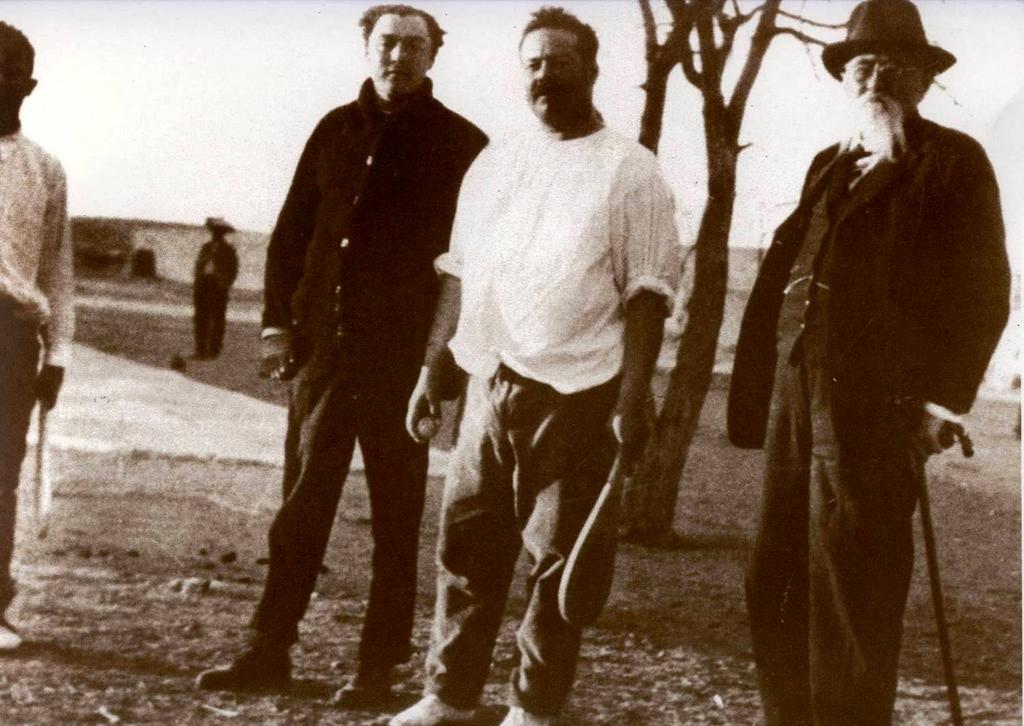
Lets see who is the first one to tell the rest of us who is the gentleman holding the pala (paddle) and the pelota (ball) in this picture:


Go wild.

.... ... .

Tuesday, March 30, 2004

Wheels in Motion

Today at Berria English:

The wheels have been set in motion

The Spanish Supreme Sports Council is to lodge an appeal against the existence of the official roller skating team of Catalonia. Another five federations are seeking to compete officially

J. O. – DONOSTIA (San Sebastian)
Without anyone realising it, the Catalan Roller Skating Federation has joined the International Federation. Approval was obtained in a meeting of the International Federation on Saturday and the presentation was made yesterday. However, the moment the Spanish Supreme Sports Council (CSD) found out that Catalonia could have an official skating team, it got down to work. Juan Antonio Gomez-Angulo, the Spanish Junior Minister for Sports, said yesterday that the CSD would be filing an appeal against the approval, and announced that it would be sending letters to all the federations that belong to the International Federation.

With these letters the CSD aims to get Saturday’s approval suspended. The decision is provisional at present and the International Roller Skating Federation (IRSF) will have to give make it permanent on November 26 in Fresno (USA). In a repetition of what happened with the Basque pelota team of the Basque Country, Spain now wants to influence the vote of the other international federations. The CSD said yesterday, “We are going to explain to them that according to Spanish regulations it is impossible for Catalonia to have an official team and they are going to be asked not to admit Catalonia."


What is hard to understand is why territories and regions like Puerto Rico, Northern Ireland, Wales, Scotland, Hong Kong, Taiwan and even Palestine are allowed to compete in different international events under their own flags but not Catalonia or Euskal Herria, hmmm...

.... ... .

Monday, October 27, 2003

IBO : Spain Censors Basque Film

As you know by now, the Spanish government led by Aznar has launched a campaign against a documentary by film maker Julio Medem as part of a broader campaign against the freedom of speech of the Basque people, a campaign that also includes direct attacks on Basque cultural organizations.

Here you have a press release by International Basque Organization for Human Rights (IBO) regarding this issue:

Spanish Government Tries To Censor Film In London

El Correo Digital reports that the Spanish Embassy in England asked for the producers of the London Film Festival to withdraw a movie from their line-up. This movie, La Pelota Vasca, La Piel Contra La Piedra (Basque Ball, Skin Against Stone) tells the tale of the current Basque conflict, from all sides of the equation. It’s director, Julio Medem, wanted to give a fair representation of the political and social strife of the Basque region. Spanish officials seem to want nothing to do with such a concept. Spain’s Minister of Culture condemned the film without even seeing it.

The London Film Festival has refused to withdraw the movie. The consequence is that Spain has pulled its traditional subsidy to the festival, which is used to pay the expenses of Spanish participants. La Pelota Vasca is scheduled to play at the London Film Festival October 26 and 27.

For more information:

International Basque Organization For Human Rights
PO Box 225
Corte Madera, CA 94976
www.euskojustice.org


.... ... .

Friday, October 24, 2003

About Medem's Documentary

Here you have an article published at The Guardian about Julio Medem's documentary "Basque Ball : The Skin Against the Wall" by Giles Tremlett, a "journalist" in the pay roll of Jose Maria Aznar:

Anyone for pelota?

Julio Medem's new film tells both sides of the bloody history of Spain's Basque country. So why is he being compared to Hitler's film-maker, asks Giles Tremlett

Giles Tremlett
The Guardian,
Thursday October 23 200

When Spanish film director Julio Medem read through his penultimate screenplay, Aitz, he was so shocked by his own writing that he threw it into the wastepaper basket. News that the director of such quirky classics of contemporary Spanish cinema as Cows and Lovers of the Arctic Circle had binned one of his scripts may alarm his devotees. But Medem insists that he jettisoned Aitz not because it was pure bilge, but because it was pure bile.

"I had got to the point where I had even made hatred a noble thing, where I thought it was beautiful to hate. It was obscene, so I threw it away," he says.

Medem's main problem was that he was Basque. Aitz had somehow got caught up in the violence that has tortured and sapped the energies of his countrymen for the past 30 years. Torn apart by the violence of Eta, battered by the opposing forces of Basque and Spanish nationalism, the Basques show no sign of finding a way out of their orgy of hatred and recrimination.

Medem had tried to escape, moving from his home city of San Sebastián to Madrid seven years ago. He had wanted to leave behind the suffocating political atmosphere imposed by those promoting the more exclusive ideals of Basque nationalism. He soon found, however, that there was no respite. For in Madrid the pendulum swung the other way. There he discovered that Basque nationalism of any kind, violent or non-violent, was fast becoming a new demon. In the capital, he says, some were beginning to forget the distinction between the Basques who used bullets to back their argument and those who used words.

And so Medem, who had already cast a sceptical eye on Basque obstinacy and the weight of tradition in his first film, Cows, made the surprising, many would say courageous, decision to turn his film- making skills to politics. The product of that move, a documentary, La Pelota Vasca: la Piel Contra la Piedra (Basque Ball: the Skin Against the Stone), is the most controversial thing to hit Spanish cinemas for years.

The sport of pelota vasca is fast, furious and athletic. Players with large curved baskets strapped to their hands hurl a small, hard ball against two walls set at right-angles. It is also, according to Medem, a form of dialogue between antagonists: the ball a point of union between two sides that are, formally, fighting one another. For the director of The Red Squirrel, Earth, and Sex and Lucia, that also made it a perfect metaphor for what is missing in the Basque country.

Designed to help fill that void and to "see hatred without hating it", Medem's Basque Ball has been condemned by the country's culture minister, Pilar del Castillo, boycotted by some intellectuals and criticised as ingenuous by the others. That is quite something for a film whose apparently modest ambition was to allow some 100 people of all political creeds to talk about 30 years of bloodshed and the growing confrontation between the conservative centralist government of prime minister José María Aznar and the non-violent Basque nationalists who run the Basque regional government.

In fact, the film was pilloried even before it opened, with two anti-Eta campaigners who had agreed to take part insisting they be removed (Medem refused) and Del Castillo declaring that Medem had placed Eta and the Spanish government on equal footing. Medem was compared to Hitler's film-maker, Leni Riefenstahl, and one politician called on him to return money state television had paid to show one of his earlier films.

Medem admits that the days before the film's showing at the San Sebastián film festival last month were pure anxiety. "I had not expected to get such a lynching. They were even saying that this film would lead people to terrorism," he says. In the end, his fellow Basques gave Medem a standing ovation, while he and Daniel Múgica, son of a local politician murdered by Eta, fell into an emotional embrace. "It was the biggest and most moving ovation of my life," he says. The film has since played well across the rest of Spain, finding a place in the top 10.

So what does a documentary made by such an idiosyncratic film-maker look like? Some of Medem's favourite visual tricks are here. His interviewees are placed in landscapes, rural and industrial, that sum up the mythical Basque country already seen in Cows - a place of rugged, sometimes brutal, beauty. Snatches of the cowardly axeman hero of Cows, of Basque stone-lifters and the rural sportsmen who are local heroes, are juxtaposed with news footage of violence and death. A naive and romantic Orson Welles appears, describing the Basque people in black and white film (and black and white terms) as neither Spanish nor French. The camera moves through the brooding Basque mountains, a vast depository of myths and of the national identity that many of those filmed seek to create or defend.

Medem, alone, edited more than 100 hours of film down to 115 minutes. His skill with the edit machine helps maintain the dramatic rhythm - as do the tragic first-hand accounts of suffering from those who have experienced the terror. It also leaves a clear, subjective and, for many, controversial message: that only a referendum among Basques could solve the region's problems. Most Spaniards would disagree.

Though Eta refused to be filmed - as did Aznar's People's party - it is difficult to explain the degree to which Medem has crossed the frontier of Spanish political acceptability. The film shows Arnaldo Otegi, leader of the now banned Batasuna party that operated as a front for Eta. For many Spaniards, Otegi is a demon incarnate, a purveyor of violence and cruelty - inexplicably supported by some 10% of Basques. Here, too, is the wife of an Eta man singing the praises of a good father and husband as she visits him in jail.

There is a pain-faced young woman relating a story of torture, beatings, naked humiliation and threats of rape at the hands of the Spanish police. Medem clearly believes her tale; given the desolate way she tells it, it is very hard not to. Viewers have to decide who is lying: the woman or a confident court doctor who denies that torture happens during the five days in which terror suspects can be held by Spanish police. Who is right? It is a question most Spanish newspapers do not air and local cinema critics left out of their reviews.

The intervention of the Eta man's wife has provoked particular rage among the film's critics. The fact that Medem chose to mix her story with that of the wife of an Eta victim has been criticised as giving equal treatment to killers and victims. But this assumes that viewers cannot think for themselves. The Eta wife's protestations that her husband is "the apple of his mother's eye" - and that, therefore, there must be some reason for his violence - serves only to make her, and her husband's cause, sound even more redundant. "This woman cannot bear the idea that her husband is a killer. She is trying to justify the unjustifiable," says Medem.

In a place where hate is such an easy emotion, the wife of the Eta victim, whose main worry is that her son "should not grow up to think he has the right to kill his father's murderers" seems, by contrast, almost angelic.

So, too, does Eduardo Madina, a young, atypical Basque socialist whose reaction to having a leg blown off by an Eta bomb is to remain faithful, despite the provocation, to the beliefs he held before that moment. Invited by his attackers to hate, Madina turned them down. He also did not like Medem's final cut, finding it too pro-Basque nationalist.

Basque Ball has, Medem says, been a form of preparation for his next film, Aitor. "I told myself that first I would do something about politics and then I would feel free to make fiction. I like this story a lot. I have a huge desire to get back to fiction, which is my real place," he says.

The hero of Aitor is, he says, the scion of a great line of pelota players who is forced, during 30 years of Basque violence, to confront a series of tests inviting him to hate. Like Madina, Aitor will refuse the invitation. Helped by the voices of his own secret opera, he will turn instead to love.

For those used to wading through the misery, fear, terror and hatreds of Basque politics, it is a refreshing, if sadly unrealistic, idea. Medem gives his documentary a poetic ending in the mouth of the Basque language's best-known writer, Bernardo Atxaga. The Basque country should be like a city, says Atxaga, embracing all, ending violence and thereby producing a form of communal levitation.

It would be a perfect ending, if only poetry really could stop violence.
· Basque Ball: the Skin Against the Stone is at the London film festival on Sunday and Monday.


Noticed how he starts out by calling Medem a Spaniard? Tremlett has nothing but contempt for the Basque people and their identity.

.... ... .

Building a New Ikastola

Today at Berria:

Auction to be held to build a new “Ikastola” in Irunberri

Well-known writers, musicians, sportspeople and artists have donated many articles to be sold by telephone and raise funds

Edurne Elizondo – IRUÑEA (Pamplona)

There is no let-up in the wave of solidarity with the Arangoiti Ikastola [Basque-medium school] of Irunberri (Lumbier, Navarre). Celebrities from the fields of science, culture and sport expressed their solidarity yesterday with the organisers of Sunday’s “Nafarroa Oinez” that was washed out by the rain.

A campaign has been launched with the slogan “Euroak euri, eutsi ametsari” (A deluge of Euros, cherish the dream): sportspeople, musicians, writers and other celebrities have donated things connected with their careers to the Ikastola to be auctioned by telephone (on 902 013883). The highest bidder will be able to take the gift home.

More figures than the Arangoiti people expected showed up at the Iruñea Planetarium yesterday for the launch of the new initiative: the physicist Pedro Migel Etxenike, the sculptor Nestor Basterretxea, the stone-lifter Iñaki Perurena, the Osasuna football team players Krutxaga, Puñal and Sanzol, the Basque pelota players Fernando Goñi, Oskar Lasa and Patxi Ruiz, the writer Aingeru Epaltza, the musician Enrike Zelaia, the mountaineer Mari Abrego… “The list is just growing and growing,” said the people in charge of the Ikastola.

October 29 is the deadline for anyone who would like to donate something. On that day and the following day the auction will end and the Arangoiti Ikastola staff will begin to distribute the prizes. The Ikastola chairman, Jose Enrique Garces, announced that on the Friday, October 31, there would be “a children’s festival” in Irunberri.

“We know that we are using the time that belongs to the Ikastola of Lizarra so we want to finish this campaign as soon as possible,” explained Nora Uribeetxeberria, Arangoiti’s head teacher. The Ikastola staff wanted to thank the Lizarra students for the fund-raising they had begun.

Garces explained that the cost of the damage caused by Sunday’s bad weather had not yet been worked out, but added that they would be “announcing it as soon as the figures had been completed.” As an example he said that the damaged stage cost 50,000 euros.


.... ... .

Tuesday, September 23, 2003

Will Someone Listen?

Here you have an analysis about the Julio Medem documentary by Amagoia Mujika published at Berria:
A daring, sincere proposal

‘La Pelota Vasca’. It was very well received the day before yesterday when it was shown for the first time; there are many views on it, but they nearly all coincide with Julio Medem’s proposal: dialogue is the way

Amagoia Mujika

Julio Medem’s proposal should not take us by surprise, but in a country where opinions are silenced and manipulated, the documentary ‘La Pelota Vasca’ (Basque Pelota) has caught us unawares; perhaps we, and other people, detect some gaps in it, each one misses people on his or her own side, but you can’t deny that it has brought many voices together, and that it is a sincere and daring stab at what is going on in this country. The person who went to see the premiere the day before yesterday is grateful for this; let us hope that the politicians present realise what point Medem was making: Ladies and Gentlemen, here we have a serious political problem, and dialogue is the solution.

The pelota player hurls the balls against the wall as if they were bullets; the tug-of-war participant wants to leave the opposing side exhausted; the heads in Asier Altuna’s ‘Topeka’(*) continually hit each other, and all this is interspersed with writers, politicians, thinkers, police officers, priests and victims... Shots of the Basque countryside and “images of primitive situations” together with Mikel Laboa’s “Gernika” songs are used to weave the themes together and reduce the tension.

Before the screening the attitude of the people was open, and when Julio Medem appeared on stage he was met with a round of applause, a gesture of audience solidarity for what has happened to him recently. The premiere began with the words of Bernardo Atxaga, and as the documentary progresses you realise that it is not specially directed at the Basque people, everything that appears is in some way familiar, but it could be an appropriate document for an international audience; it provides a historical perspective, it mentions the Carlist wars, the loss of the “fueros” [the ancient Basque laws and privileges], the Franco era, the transition and the current situation.
(*) Short film depicting rams fighting and the audience’s reaction.


.... ... .

Tuesday, August 26, 2003

June Thomas : Basqueland I

This article comes to us via Slate, it opens up with a shaky start (the Basque Country DOES NOT smell like Spain) but then it improves dramatically, here you have the first chapter:

Adventures in Basqueland

From: June Thomas
Subject: Guilt-Free Ethno-Tourism in Bilbao

Monday, August 25, 2003, at 2:22 PM PT

The Basque Country smells like Spain—a mixture of wine, sweat, eau de cologne, olive oil, and "black" tobacco. And the locals' food fixation is quite French. But as a poster I saw in San Sebastián explains, "Tourist remember: You are not in Spain nor in France, you are in the Basque Country."

I came to Bilbao, the region's biggest city, for Aste Nagusia, the "Great Week" of fiestas, when, as a tourist brochure put it, the city "comes to life in the midst of summer lethargy to experience the most entertaining week of the year." The program is amazingly varied—Basque music and dancing, traditional rural sports, a pelota tournament, an international fireworks competition, cooking contests, kids' activities, open-air cinema, street theater, nine bullfights, scores of free open-air concerts, and thousands of people out on the streets all through the night.

Forget eco-tourism, this is guilt-free ethno-tourism. You don't have to schlep to the jungle for an anthropological experience—take a chair in a terrace bar in Bilbao's old town, the Casco Viejo, and you can see sword dances, battle raps in the ancient Basque language, and wandering minstrels playing traditional music on instruments with names like the txistu, txalaparta, and alboka. After dinner at one of the city's great restaurants (only San Sebastián up the coast has a better culinary reputation), you can put ethnographic studies behind you and wander around the city drinking at the 26 txosnas—booths that serve beer and cocktails until 5 a.m.—sampling the free concerts.

This year's Aste Nagusia blossomed in a mud puddle. It was pouring on Saturday evening when Bilbaínos gathered outside the Teatro Arriago in the Casco Viejo to greet Marijaia, the muse and symbol of the fiestas. Since most of the revelers were dressed for sun, I figured that, as in Seattle, the residents of a rainy place distinguish themselves from sightseers by eschewing umbrellas. As soon as the giant figure of Marijaia, a homely middle-aged woman with outstretched arms, appeared on the balcony and the strains of "Badator Marijaia," the Aste Nagusia theme tune, started to blast from the loudspeakers, I understood why the crowd was so indifferent to the rain—they knew they were going home soaked to the skin anyway, so why worry. Once the txupin—the rocket that officially launches Aste Nagusia—had been fired, the bottles of champagne and other bubbly beverages that folks had brought to toast the fiestas became makeshift showerheads, and revelers good-naturedly pelted each other with bags of flour. After a couple of minutes of toasting, showering, and flour-bombing, most of the crowd looked like contestants in a concrete factory's wet-T-shirt contest.

In 1609, Frenchman Pierre de Lanure reported to his superiors in Bordeaux that the Basques were "light and quick in body and spirit, liking late evenings and dancing." In the four hundred years since, they've certainly not lost their taste for staying up.

Although the Basques' nocturnal nature might still shock the French, Spaniards generally love to trasnochar—given the climate, it just makes sense to get work done in the morning, rest at the hottest part of the day, then hit the streets when the sun goes down. (Besides, other than retail and service industry workers, most Spaniards are on vacation for the whole month of August anyway, and hay que aprovechar—you have to take advantage of the break.) Throughout Spain, it's not unusual to see entire families—several generations from oldsters to tiny tots—rambling around at 3 a.m. during their town's fiestas. The Basques of Bilbao are no exception: From 8 each evening, the streets of the Casco Viejo are jammed with people—crowds of a size you'd see at the Washington Mall on July 4 or in Times Square on New Year's Eve—enjoying a summer evening stroll and greeting friends and neighbors as they too take a paseo through the neighborhood.

In the States, fireworks usually represent the end of a holiday—the last bangs and whistles before the hangover kicks in. In Bilbao, the nightly 10:30 show is just the start of the night's entertainment—the big concerts don't even begin until 12:30. Even the Guggenheim has a late show, opening from 11 p.m. until 2 a.m. for four nights of Aste Nagusia.

The Basques still love their music and dancing, too. On Sunday afternoon, I was in the Museo Vasco on Plaza Unamuno, desperately trying to take in the earnest exhibits about Iron Age implements, traditional Basque shepherding techniques, and the many and varied uses for sheep horns, when the museum's atmospheric sound effects (baaaah) were interrupted by the sounds of music from the street below. Even the museum guard couldn't bear to stare at the dioramas for a moment longer, cracking the window to peek down at the living embodiment of Basque culture. On the street, standing outside a bar, multitasking pipe-and-drummers sipped vermouth and chewed on salchichas while a male voice chorus circled and sang. Once the host bar's tribute was exhausted, the pipers signaled that it was time to head to the next corner for another impromptu performance.

Every day, groups performing styles of traditional regional music known as trikitrixa, alboka, and gaita tour the original seven streets of the Casco Viejo. Although some, especially the choral groups, tend to be dominated by graybeards, others are composed of twentysomething scenesters. Here and in the dances of the Basque Country performed every evening in the Plaza Nueva, I was shocked by how hip the artists were. Several of the young women playing medieval music on authentic instruments or dancing a jota had facial piercings; the guys with bells tied round their knees doing the sword dance while wearing big goofy red berets were cool kids with tattoos and novelty sideburns. In the Basque Country these days, it seems, it's hip to be square.

.... ... .

Thursday, June 05, 2003

Mark Hill : Basque Nationalism and Cycling V

Well, even good things come to an end, here you have the last delivery on Mark A. Hill's magnificent piece title "The Spokes of Nationalism", an in depth analysis of the influence of Basque nationalism in cycling which was published at Daily Peloton.

Here it is:

1996/97 Conclusion

This study has demonstrated that throughout the region’s history, cycling has been part of the projection of Basque modernity and distinction from the Spanish state. Cycle sport can also be seen to have provided a nationalist focus that mirrors that of football. Despite the Franco era curtailing the explicit use of sport as a nationalist tool by the regions, since 1975 overt Basque nationalism has evidently been promoted via the capitalist sponsorship of cycle sport and has culminated in one of the strongest examples of a correlation between sport and national identity.

There are many areas within this initial study which require more in depth analysis. These will be expanded upon following a number of visits to the Basque Country itself and interviews with key protagonists. However, the study does provide an initial investigation of the links between cycle sport and nationalism in the Basque Country, which should lead to a subsequent post-graduate study or independent publication.

It remains the case that the Basque Country provides a fascinating and in many ways unique use of sport as a nationalist medium. The interaction between the region’s businesses and the nationalist nature of the Euskadi team has not been truly rivalled in any other Spanish region, despite failed attempts in Galicia and Catalunya. Furthermore, the different utilisation of sporting events by the capitalists and ETA, provides an interesting comparative example of how to promote nationalist claims at an international level. Whilst militants attempted to block the progress of stage 16 of the 1996 Tour de France on route to the Spanish border, most Basques rejected any disruption of the event. International recognition of Basque sensibilities was made by the Société du Tour de France, as all race publicity and information was written in French and Euskera. All Euskadi Foundation material is published in Euskera and Spanish, whilst El Diario Vasco has published all San Sabastián Classic information in Euskera, Spanish and French.1

The remarks of the German winner of the 1996 San Sabastian Classic, Udo Bolts, “I looked at the race programme this morning and saw Lance (Armstrong) wearing the Basque hat they give the winner each year - I thought I’d really like one of those. The Basque Country is very special, the people here love cycling”, expresses the recognition which Basques have achieved in cycle sport. Of symbolic cultural significance is the presentation of the Basque beret to the winner.2

The use of nationalist symbolism and imagery in Basque cycling remains unmatched by other sports. Its international prestige sets it apart from native sports such as pelota. The themes embodied in this study confirm that cycle sport has provided a significant form of nationalist expression, through which the Basque Country has promoted its unique identity. It also demonstrates that cycling unlike any other modern sport, including football, has been constantly inter-twined with the very development of Basque nationalism from the 1890’s to the present day.

Footnotes:

1. El Diario Vasco: Organizaciones Deportivas, San Sabastián Clásica programme, 1996.
2. Press Conference as quoted in Cycling Weekly, IPC Magazines, UK, 1996. p12

Bibliography

1: Newspapers and Journals

a) Newspapers and Magazines:

ABC, (29 September 1996.)

Diario 16, (19 February 1989.)

El Pais, (15 July 1994.)

Gazzetto Dello Sport, (5 January 1997.)

Marca, (14 July 1992, 8 July 1994, 17+18 July 1996, 11 September 1996.)

Cycle Sport, IPC Magazines UK. (August 1994, May 1995, August 1995, October 1995, November 1995, March 1996, July 1996, November 1996, February 1997, March 1997, April 1997).

Cycling Weekly, IPC Magazines UK. (6 and 20 July 1996, 12 August 1996).


b) Journals:

J. Harrison, “The Regenerationist Movement in Spain After the Disaster of 1898”, European Studies Review, vol 9, number 1, January 1979.

J. Harrison, “Big Business and the Rise of Basque Nationalism”, European Studies Review, number 7, 1977.

S.G. Jones, “The European Workers’ Sports Movement”, European History Quarterly, vol 18, 1988.

S.G. Payne, “Catalan and Basque Nationalism”, Journal of Contemporary History, vol 6, number 1, 1971.

2: Books

B. Anderson, Imagined Communities, Verso, London, 1983.

J. Breuilly, Nationalism and the State, Manchester University Press, GB, 1993.

R. Carr, Modern Spain, Opus, Hong-Kong, 1980.

R. Carr & J.P. Fusi, Spain: Dictatorship to Democracy, UK, 1979.

J. Evans, The Guiness Book of Cycling Facts and Feats, Guiness Publishing, London, 1996.

José Luis de la Granja Sainz, El Navionalismo Vasco: Un Siglo de Historia, Madrid, 1995.

M. Heiberg, The Making of the Basque Nation, CUP, GB, 1989.

J.A. Mangan, Tribal Identities: Nationalism, Europe, Sport, Frank Cass, London, 1996

S.G. Payne, Basque Nationalism, University of Nevada Press, USA, 1975.

P. Preston, Franco, Fontana, London, 1995.

P. Preston, Politics of Revenge, Routledge, London, 1995.

P. Preston, The Triumph of Democracy in Spain, Routledge, London, 1996 edn.

J. Sullivan, ETA and Basque Nationalism: The Fight for Euskadi 1890-1986, Routledge, London, 1988.

C. Williams, National Separatism, (ed), University of Cardiff, Wales, 1982.


3: Unpublished Work

D.R. Shaw, “The political instrumentalisation of football in Francoist Spain, 1939-1975”, University of London Phd Thesis, Queen Mary & Westfield, 1988.

L. Shand, “Centre Periphery Relations: The Basque Region of Northern Spain”, University of London, LSE MA dissertation, 1989.

4: Other Sources

Euskadi Cycle Team Foundation, information brochure, number 2, 1996.

Federe Ciclismo, Vuelta a España, programme, 1996.


If you are interested, here you have the links to all the previous entries:


.... ... .