Wednesday, January 16, 2008

Suffocating Democracy

Under the rule of the socialist Jose Luis Rodriguez Zapatero, Madrid decides to expand its repressive measures against the Basque people by abducting the politic rights of ample sectors of the electorate by threatening with banning two more political parties.

Here you have the note appeared at EITb:

Politics

Likely to be banned

ANV, EHAK accuse governing Socialists of choosing "repression"

01/15/2008

ANV reiterated that "it will stand" in the Spanish parliamentary election on March 9. EHAK have made an appeal for protests against a possible banning.

Basque left-wing parties ANV and EHAK accused the governing Socialist party PSOE of choosing "repression" as several Spanish media report that the two Basque parties might be barred within the next two weeks from any political activity.

In a press conference in which there were no questions, a spokesman for ANV denounced the Spanish Government wants to "criminalize" the Basque party "for expressing a loving attitude towards a certain sector of the population." He also denounced the Spain's High Court might use the "words of the Mayor of Hernani Marian Beitialarrangoitia, exercising her freedom of speech" as evidence to outlaw ANV.

"The Government's injustice seems endless" the ANV spokesman said as he pointed out that "this can only happen in a country very ill and weak in democratic values".

In a separate press conference, spokeswoman for EHAK Nekane Erauskin appealed for the "capacity to fight repression back" and asked the Basques to protest against the "activation of the judicial and police reins" to ban EHAK.

She also denounced that the Basque parties PNV, EA, EB and Aralar take advantage of the law of Political Parties despite saying in public they are against it.


.... ... .

Monday, January 14, 2008

Leizarraga's Text Back Home

An important piece of Basque cultural heritage is now back home. Here you have the note via EITb:

Entertainment

For 20,500 pounds

Leizarraga’s New Testament has already an owner

01/14/2008

Last November 28, the prestigious Shoteby’s Auction House of London put Leizarraga’s New Testament for auction but nobody bought it. Finally, Euskaltzaindia has bought it.

Leizarraga’s New Testament, published in 1571, has already an owner; Euskaltzaindia, the Royal Academy of Basque Language, bought it for 20,500 pounds. This work is the first Bible published exclusively in Basque language.

The prestigious Shoteby’s Auction House of London put the New Testament written by Basque Protestant priest Joannes Leizarraga for auction. Its first price was 20,000 pounds. However, nobody offered more and therefore the copy was not sold. As a consequence, Euskaltzaindia contacted the auction house and, after some negotiations, they finally managed to buy the famous work.

The New Testament written by Leizarraga is the second book written in Basque language.

Leizarraga was born in Beskoitze (Northern Basque Country) and he died in Bastida in 1601.


.... ... .

Alex de la Iglesia Goes to Oxford

Here you have the report by EITB:

Entertainment

Cinema

Alex de la Iglesia moves to mystery in 'Oxford Crimes’

01/14/2008

The film’s premiere is on Friday in all Spanish cinemas, and it is based on the Argentinean Guillermo Martínez’s novel to form a plot involving Mathematics codes.

The Basque film maker, Alex de la Iglesia, moves from his particular way of understanding cinema to the strict academic atmosphere of Great Britain and gets involved for the first time in an international project with Oxford Crimes (Los Crímenes de Oxford), a classical mystery movie that has Elijah Wood and John Hurt as protagonists.

Although he admits having instilled “a bit of tragedy into comedy” in his filmography, Alex de la Iglesia concentrates in mystery and drama on his new film, Oxford Crimes, a “daring and complicate” project entirely filmed in English.

The film’s premiere is on Friday, in all Spanish cinemas and it is based on the Argentinean Guillermo Martínez’s novel to form a plot involving Mathematics codes and clear references to mystery cinema, with the Spanish actress Leonor Watling in a secundary role.

Inspired in Hitchcock

De la Iglesia recognizes being between the two points of his characters, as “the distrustful one who keeps certain hope”, and having been inspired more than ever in Alfred Hitchcock to tell this story.

In Oxford Crimes, Martin, a Maths student -Elijah Wood- and Seldom, a logic teacher -John Hurt- form an unexpected alliance to find out the responsible of the crimes.


.... ... .

Abuse of Power

Speaking of Hernani, EITb brings us a note that exposes Spain as a totalitarian state. First the Spanish police forces arrested and tortured two Basques youths a week ago, from the torture they extracted some outlandish confessions that Spanish judge Grande-Marlaska validated, throughout the process Spain's Minister of the Interior Rubalcaba was found lying in an attempt to excuse the brutal methods used by the police against Basque activists. Well, as if all that was not enough, now Madrid threatens Hernani's mayor Marian Beitialarrangoitia for expressing the solidarity of the Basque people for the two youths named Igor Portu and Mattin Sarasola.

Here you have the note:

Politics

According to judicial sources

Public Prosecutor asks for legal action against Mayor of Hernani

01/13/2008

In a political rally in Pamplona/Iruña, Marian Beitialarrangoitia of the Basque leftist party ANV requested a round of applause for the two presumed ETA members Igor Portu and Mattin Sarasola arrested last week.

Spain's Public Prosecutor's Office asked on Sunday for legal action against Mayor of Hernani Marian Beitialarrangoitia for her conduct in a political rally in Pamplona/Iruña, official sources said on Sunday.

Marian Beitialarrangoitia, Mayor of the Basque town of Hernani, took part in a political rally of the left-wing party ANV to present the list of candidates for the March parliamentary vote. During the rally, Beitialarrangoitia requested a round of applause for Igor Portu and Mattin Sarasola, two presumed members of the armed Basque group ETA arrested last week.

According to judicial sources, the ANV mayor could be accused of praising terrorism.


What this means is that in Spain speaking out against torture and showing solidarity with the victims of this criminal policy by the Spanish state is a crime.

My goodness, is like Francisco Franco is alive and kicking. Only that this time the one behind all the state sponsored terrorism is a "socialist" called Jose Luis Rodriguez Zapatero.

.... ... .

Cider Season

This note appeared at EITb:

Life

Rooted in tradition

Cider Season opened in the Basque Country

01/13/2008

Radio Euskadi journalist Javier Vizcaino opened Sunday morning the cider season in the Basque town of Hernani.

Radio Euskadi journalist Javier Vizcaino opened Sunday morning the cider season. In the next three months, hundreds of people will flock to the cider houses to drink this year’s cider and taste the traditional menu.

Cider houses are usually caserios - or country houses- mostly located in Gipuzkoa, which have facilities for the preparation and bottling of cider, and a space for the "kupelas" (barrels) and long tables where patrons can taste the specialities (cod omelette, fried cod with green peppers, and barbecued steak).

The season begins in January and finishes mid-April. During these months, it has become a tradition for the Basque people to come to these cider temples to practice the "txotx" ritual, which is extremely beautiful and peculiar: the owner of the cider house chooses a kupela (barrel) and he yells out "txotx", thus inviting all those attending to taste the cider. Consumption of cider is unlimited.


.... ... .

Wait a Moment

Spain's Prime Minister Jose Luis Rodriguez Zapatero has lost all touch with the real world.

Check out this note by Reuters brought to us by Yahoo News:

Spanish PM rules out more talks with ETA rebels

Reuters - Monday, January 14 08:57 am

MADRID (Reuters) - Spain's prime minister has ruled out any chance of attempting peace talks with Basque separatist rebels ETA if he wins a parliamentary election on March 9.

Jose Luis Rodriguez Zapatero, a Socialist who broke off an earlier attempt at negotiations with ETA late in 2006, told Monday's edition of newspaper El Mundo that the organisation's only option was unilateral surrender.

"I don't see any chance, in the next parliament, of a dialogue process like that which took place," Zapatero said.

"The only possibility is a unilateral end to ETA."

The government ended peace talks after less than a year when ETA, which wants independence for ancient Basque territories in Spain and France, bombed a car park at Madrid airport in December 2006 and killed two people sleeping in their cars.

ETA also shot dead two undercover policemen last year.

It was the third failed attempt at peace talks by a Spanish government with ETA. The rebel organisation, whose full name means Basque Homeland and Freedom, has killed more than 800 people since its formation four decades ago in the final days of the dictatorship of Francisco Franco.

The Basque question is set to be a major issue in March's elections. The conservative opposition, narrowly trailing the Socialists in opinion polls, accuses the government of putting the future of Spain at risk by contacts with the separatists.

Since the end of talks, authorities have arrested leading members of ETA's alleged political wing Batasuna and staged regular round-ups of suspected guerrillas.

Polls show most inhabitants of the Spanish Basque Country, which already has considerable autonomy over areas such as education and health, do not want to split from Madrid.

But the region's government says it wants a debate about its relationship with the rest of Spain.

(Reporting by Jason Webb; Editing by Dominic Evans)


He rules out more talks?

When did he actually talked to them in the first place?

Rodriguez Zapatero squandered a great opportunity of a peaceful resolution of the Basque conflict when he decided to woe the votes of those who fluctuate between the PSOE and the PP depending on which party stages more repressive measures against the Basque right to self determination. This is why Zapatero ordered ETA's negotiators to be arrested during the armed group's ceasefire.

How can you establish a dialogue with someone if you incarcerate that person? How can a negotiator go back to his people and present the result of a negotiation if that person ends behind bars?

The stark truth is that Rodriguez Zapatero torpedoed the Peace Process for the Basque Country because that attitude provides him with political benefits. He was busted lying when Basque newspaper Gara reported that ETA continued its efforts to talk to Zapatero even after the bombing in Madrid's airport in December of 2006, this note by Reuters is nothing else that what politicians call "damage control". They did talk, only that Zapatero was not listening.

.... ... .

Saturday, January 12, 2008

Nowhere To Hide

Here you have a review of Atxaga's must recent book published by the Guardian Unlimited:

No hiding place

The Basque struggle provides a compelling background to Bernardo Atxaga's The Accordionist's Son, says Nick Caistor

Saturday January 12, 2008
The Guardian

The Accordionist's Son
by Bernardo Atxaga, translated by Margaret Jull Costa
384pp, Harvill Secker, pounds 18.99

The Basques have a word for it. That word is usually unpronounceable and unconnected to any other European language, reflecting the uniqueness of the history of that troubled, distinctive northern corner of Spain. In The Accordionist's Son , one of these words is zulo, here translated as "hiding-place". Over the 60-year period that the novel covers, from the 1930s to the 1990s, this zulo is used for many different purposes, all of them essential to the lived history of the village of Obaba in the heart of the Basque country.

During the civil war in the 30s, "the American" who owns a hotel coveted by the Francoists is hidden there before he succeeds in escaping over the border to France and eventually makes it back to the United States. In the 60s, the novel's protagonist David Imaz spends hours in its dark well as he makes his silent protest at being forced to play his accordion at the inauguration of a monument being erected for only one side of those who fought in the civil war. And in the 70s, when a new Spain and a new Basque country are struggling to emerge as the Franco regime crumbles, the zulo is given a more sinister function: it is used as a prison where the groups fighting for Basque independence keep the people they have kidnapped and are holding to ransom. Beyond this, Bernardo Atxaga suggests, the zulo is a symbol of the state of mind of the Basques themselves: the dark, hidden place where their complex identity is forged and from which they often only reluctantly emerge.

The novel begins and ends far from Obaba. Like many Basques, the Imaz family have been forced to emigrate. For reasons that become clear only later, David has gone to join his Uncle Juan in California. The opening centres on David's death and the arrival of Joseba, his closest friend from the Basque country, to attend his funeral. David's American widow Mary Ann presents Joseba with her husband's long memoir about his life before emigration and his explanation of how he arrived in California, and it is this memoir that constitutes the bulk of The Accordionist's Son. Born in the 50s, David finds himself surrounded by adults who bear the scars of a war he did not participate in and whose meaning he only gradually comes to understand. As he does so, he realises not only that his father Angel (the accordionist) was on Franco's side, but that he could have been directly responsible for the deaths of seven people in their home village of Obaba. Growing to manhood, David rejects his father's view of the world, with its illusion of progress and attraction to the sophistication of life beyond the village. He himself is far more drawn to the countryside, to horses, the forests surrounding the green valleys, his "peasant" friends, Joseba and local girls, the link with the land and the sensual pleasures of being immersed in still unspoilt nature.

Despite this, David accepts the need to go away to university to study. There in the early 70s he meets fellow students who are much more politically aware than he is. They do not simply feel nostalgia for the village life of the Basque country - they see it as somewhere that has always suffered at the hands of the Spanish, with Franco as simply the most recent manifestation of this oppression. They are determined to take advantage of his disappearance to win independence at last. Almost without realising it, David and Joseba find themselves drawn into this movement, until at the climax of the book they are faced with the choice between espousing violence to win freedom and accepting that yet again others will decide their future for them - in many ways the same choice as that faced by their parents' generation.

In all his work, Atxaga delves into the impact of the political on individual lives. What is most moving in The Accordionist's Son is the push and counter-push of these pressures on a believable individual (and Margaret Jull Costa's elegant and unfussy translation gives us a clear view of him in English) as he contends with the weight of history and a sense of belonging, and assesses his possibilities for action.

The conclusion to the novel is in many ways a sombre one. David rejects using violent means to preserve his garden of Eden, and in so doing is expelled far from it, to a 21st century in which Basque shepherds tend their sheep in the parks of San Francisco. Escape from the zulo can only come at a huge cost.

.... ... .

WSJ Versus Euskara

The saga continues, this is the must recent installment of the smear campaign against euskera by Rupert Murdoch, Jose Maria Aznar and their underling Keith Johnson.

It appeared at EITb:

Life

Controversial article

Face to face between Eusko Ikaskuntza and Wall Street Journal

01/11/2008

On November 6th, 2007, the American edition of the Wall Street Journal published in the front page the article "Basque Inquisition: How Do You Say Shepherd in Euskera" provoking Basque people’s indignation and answer.

On November 6th, 2007, the American edition of the Wall Street Journal published in the front page the article "Basque Inquisition: How Do You Say Shepherd in Euskera?" provoking Basque people’s indignation and Basque Government’s formal answer.

At thousands of kilometers far from the Basque Country, in New York, representatives of Eusko Ikaskuntza and Wall Street Journal’s assistant director will meet as it was expected.

In the last months they had a pending conversation about the controversial article that journalist Keith Johnson published in this diary about Basque language, a language that among some other adjectives he called “backward”, “rural” and “without any adapting possibilities”.

The article and its content were broadly spread by Basque media and from the first day, Basque internauts sent complain messages to the author, who realizing about the amount of received e-mails, decided to reply the readers stating that his intention “was never denigrate Basque language” and that he was sorry “about any offense he could have done to Basque speakers”.

That same day, Basque Government sent a complain letter to the newspaper and some days after, 180 high public figures from several fields and countries also sent a similar protest letter.

To finish with, Eusko Ikaskuntza gave 17.000 collected signatures in a campaign made on the web against the article too.

.... ... .

Euskaltel Euskadi in Irun

This note comes to us thanks to Cycling News:

News Feature, January 12, 2008

Talde lana – Euskaltel Euskadi presented in Irún

Talde lana – Trabajo de equipo: "Team work" was the motto of the 2008 Euskaltel Euskadi presentation on Thursday night in Irún (Gipuzkoa). Steeped in Basque tradition, the squad celebrated its 15th season in the professional peloton. Cyclingnews' Monika Prell was in Irún for the presentation.

A group of musicians playing Basque music set the tone for the Euskaltel-Euskadi team presentation in Irún, giving a traditional atmosphere to the celebration of the squad's 15th year, ten of which have fallen under the sponsorship of the Euskaltel company. After a stirring video recap of the 2007 season, the 26 cyclists who will take on the upcoming season on the road were presented one by one.

The four main riders are the Asturian star Samuel Sánchez, the experienced Haimar Zubeldia, young Igor Antón and the veteran Mikel Astarloza. Sánchez will focus this year on the Tour de France, choosing to start his season late, meaning he will skip both Paris-Nice and the Vuelta al País Vasco. "This will be a radical change, and I will miss the spring races. In the Tour, I would like to win a stage, as this is one thing that still lacks in my palmarès. Thinking in the podium is still too premature," said Sánchez.

One of the mayor objectives of Zubeldia will also be the Tour de France, but with a different preparation. "The beginning of the season should be very strong up until Paris-Nice, and then will begin the preparation for the Tour." He does not see a rival in Sánchez in his special subject, the Tour de France, but affirmed that "the fact that Samuel will be at my side will give me tranquility, because the responsibility will be shared."

The Basque team has always been known for its climbers, but for 2008 adds a new weapon to its arsenal in three sprinters: veteran Iñaki Isasi, 26 year-old Koldo Fernández de Larrea, who took his first sprint victory in the 2007 Tirreno-Adriatico, and Aitor Galdos, a fast man who should be able to win a race this year. "I hope to find the form I had two years ago when I was able to win races, and I hope to win races so that the team is happy with me. My participation in the Giro d'Italia will depend upon my performance through Tirreno-Adriatico", said the 28 year-old Galdos.

As in past years, the 2008 Euskaltel-Euskadi group has a large contingent of young riders, including Amets Txurruka, who is one of the big hopes for the future. "I want to show a better performance than last year and to win a race, if possible," said Txurruka, who made a name for himself with his presence in several breakaways during the 2007 Tour de France, and won the most aggressive rider prize. "In principle, I will form part of the Tour team, but until July there is still a long way to go."

Jorge Azanza will spend his second professional year as a member of the Basque team. "I hope to show my best this season, being strong in March and April and our home races [Vuelta al País Vasco and Euskal Bizikleta]." For now, the 25 year-old does not have any Grand Tour in his calendar, but said, "if I ride strong I will have the possibility to ride the Tour de France or the Vuelta a España."

Another young rider in his second year is Iván Velasco. The rider from Arrasate will focus on the early season. "I will begin the year strong, then I will have a break before riding the Giro. I feel well in the team, I already had some possibilities last year and I hope to be able to benefit from them this year."

The experienced rider Dioni Galparsoro had a lot of bad luck last year, and struggled with illnesses and bad crashes. For 2008, he hopes things will go more smoothly. "I hope this year I won't have health problems and that I will be able to win a race. I will compete the Giro d'Italia and then perhaps the Vuelta a España." He will be one of the leaders of the team for the Giro d'Italia, and will set out to improve upon his solid performance from 2007 which was dashed when he wrecked and broke his elbow.

After the presentation of the riders, the sport directors and the staff, a short film gave the large audience the opportunity to re-live the greatest moments of the team from past 15 years, including the stage victory of Roberto Laiseka in Luz Ardiden (Tour de France 2001). The first rider who won an official race for the team Euskadi was Agustín Sagasti, in the Vuelta al País Vasco in 1994. He was honoured by the team's General Manager, Miguel Madariaga.

José Alberto Pradera, the former deputy of Bizkaia and one of the founders of the team was proud of what the organisation had become. "I am not surprised by the evolution the team has made up until today. We thought that it had to be like this when we started the project." He reminded the audience that in the beginning, the team has been seen as "craziness." He thanked sponsor Euskaltel, and showed his pride that Euskaltel-Euskadi is seen in the world as a [Basque] 'national team', even not all the team members are Basque.

Madariaga is looking confidently towards the new season. "The team has completed a great season, thanks to the riders and the collaboration with the sponsor Euskaltel. I wish 2008 to be as great as 2007 and I wish the boys a bit more force because I am convinced that the team still does have potential." He is sure that "with the help of the fans we will reach those objectives."

A curious little anecdote passed before the official photo of the team has been taken by the photographers: two riders, Lander Aperribay and Josu Agirre, became dizzy and had to leave the stage, so that they were absent in the last photo. The presentation had a fiery end, as – accompanied again by the Basque musicians, a little firework was ignited in the hall, generating the applause of the public.

The full 2008 team: Josu Agirre, Beñat Albizuri, Igor Antón, Lander Aperribay, Francisco Javier Aramendia, Mikel Astarloza, Jorge Azanza, Jon Bru, Koldo Fernández de Larrea, Aitor Galdos, Dionisio Galparsoro, Aitor Hernández, Markel Irizar, Iñaki Isasi, Andoni Lafuente, Iñigo Landaluze, Antton Luengo, Egoi Martínez, Juanjo Oroz, Alan Pérez, Rubén Pérez, Samuel Sánchez, Amets Txurruka, Iván Velasco, Gorka Verdugo, Haimar Zubeldia.


.... ... .

Eusko Flickr : Basque Towns


Basque Towns
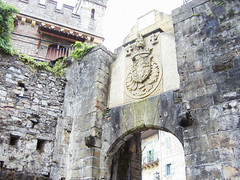
Originally uploaded by sendchris